U.S. Supreme Court Limits Use of Warrantless Blood Draws In DUI Cases

April 21st, 2013

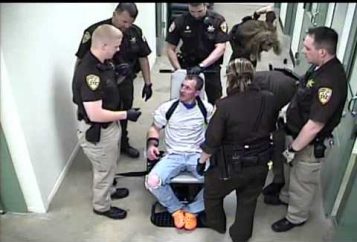
As predicted in our prior blogs, the United States Supreme Court refused to follow the government’s position that exigent circumstances exits to justify the warrantless extraction of blood from all DUI suspects based solely of the fact that blood alcohol evidence dissipates with time. The decision in Missouri v. McNeely affirms the long standing but misunderstood rule of Schmerber v. California that true exigency is required to bypass the warrant requirement. The court’s reliance on Schmerber is critical because it reaffirms a long standing rule of law and therefore will be controling in pending cases notweithstanding the prosecution’s predictiable position that this is new and cops should not be punished for their “good faith” reliance on prior bad law in California. This case should have a big impact on DUI cases in Orange County where police agencies in Laguna Beach, Newport Beach, Irvine, Costa Mesa and Huntington Beach routinely force blood without a warrant when DUI arrestees refuse to consent to a blood test. This is a common practice where a subject has trouble giving a breath test or submits to a breath test and maintains that they do not have to provide a post arrest sample. This case is great news to those charged with a DUI in Orange County when blood is taken without a warrant or consent.

Missouri v McNeely May Change California’s Warrantless Forced Blood Draw Rule

March 29th, 2013

Under current California law a police officer does not have to obtain a search warrant to obtain a driver’s blood in a DUI case if the driver does not consent to a chemical test of his breath or blood in a DUI alcohol case or blood in a case involving DUI under the influence of drugs or the combined influence of drugs and alcohol. California law allows forcible blood draws without a warrant in all cases where a subjected has been lawfully arrested for DUI and either refuses to take a test or fails to complete a test. The California Supreme Court has reasoned that the dissipation of alcohol over time creates an exception to the requirement of a search warrant which justifies the non consensual and even forceful taking of blood. When this happens, the driver is then subjected to lengthy suspensions of their drivers license as well as mandatory jail time if convicted. This rule may be altered by the United States Supreme Court which has heard arguments In Missouri v McNeely in January and should release it’s opinion shortly. Based on the questions and comments of the Justices during oral argument, the California per se rule seems to be at risk because search warrants have become much easier to obtain telephonically or electronically.

St. Patrick’s Day Orange County DUI Checkpoints

March 17th, 2013

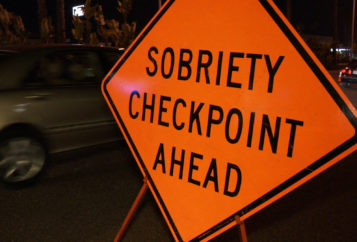
Well, it’s that time of year again: St. Patrick’s Day, and this time it occurs on a weekend, which means Orange County Law Enforcement agencies were setting up DUI checkpoints and Roving DUI Patrols throughout Orange County, California looking for DUI Drivers. If you were stopped at a DUI checkpoint or by an officer assigned to the Roving DUI Patrols, look no further than the DUI Lawyers of the Law Office of Barry T. Simons to represent you in your Orange County DUI case. The DUI Attorneys of the Law Office of Barry T. Simons are the Recognized Leaders in DUI Defense in Orange County and throughout Southern California.

Local news reports have indicated that DUI Checkpoints have been set-up throughout Orange County over this St. Patrick’s Day weekend. From San Clemente to Anaheim, from Newport Beach, Laguna Beach and Irvine to Tustin, Fullerton and Seal Beach, Orange County law enforcement agencies were working hard to arrest anyone participating in the St. Patrick’s Day festivities. Do not let sub-par representation lead to a DUI conviction that could have been avoided had you or a loved one hired the DUI Lawyers of the Law Office of Barry T. Simons to defend against the Orange County DUI charges.

If you or a loved one was caught-up in an Orange County DUI Checkpoint, contact the DUI Attorneys of the Law Office of Barry T. Simons immediately for a free, no-cost, DUI Consultation and DUI Case Evaluation. The call you make today could mean the difference between a dismissal and a conviction.

Orange County Superior Court Judge Being Investigated For Alleged Quid Pro Quo Sexual Affair

March 6th, 2013

When the news broke about Orange County Superior Court Judge Scott Steiner’s alleged acts of misconduct, I immediately thought: “Judge Not Lest Ye Be Judged.” According to news reports, specifically, an OC Weekly Blog, Judge Steiner “may have enjoyed a quid pro quo sexual affair that landed a woman a job at the [Orange County] District Attorney’s office.” The women has yet to be identified and the investigation is on-going.

According to the OC Weekly Blog, “[T]he probe is being handled by sheriff’s deputies and, if charges are filed, they’ll be prosecuted by the AG’s office, according to AG spokeswoman Lynda Gledhill, who acknowledged that OC authorities gave her office “a heads up” about the case; thus, the allegations are being investigated by the California Attorney General’s Office with the assistance of the Orange County Sheriff’s Department.

According to KTLA News, the investigation originated when Chapman University’s Law School officials asked to interview members of the Orange County District Attorney’s Office. Judge Steiner is, or was, an adjunct professor at the Chapman University Law School since 2008 and, according to the OC Weekly Blog, “The Orange County District Attorney’s office, where Steiner worked before becoming a judge, recused itself after learning of the allegations and notified the AG’s office.” In fact, according to OC Weekly, in the days before Judge Steiner was transferred from his “weighty duties in the county’s central courthouse in Santa Ana to minor duties in Fullerton court, [Orange County] prosecutors refused to appear before [Judge] Steiner. Judge Steiner’s first assignment was as a duty court and trial court judge, but was later assigned to Department C-47 to run the misdemeanor pretrial calendar at the Central Justice Center in Santa Ana.

Steiner, (who may or may no longer be a part-time law professor at Chapman University’s Law School), was a well-known and well-respected prosecutor for the Orange County District Attorney’s Office prior to becoming a Judge. According to many who worked with Steiner, “he performed exceptional work in controversial hate crime cases and had been a longtime conservative, Republican Party activist.” He rose to the bench with the enthusiastic backing of the District Attorney, Tony Rackauckas. Steiner’s father, Bill Steiner, was a County Supervisor.

In addition to the allegations that “a married Superior Court judge may have enjoyed a quid pro quo sexual affair that landed a woman a job in the District Attorney’s office,” OC Weekly also reports that “other well-placed legal sources say that the allegations may include courthouse sex.” It will be interesting to see whether the allegations are true, but in the interim, the investigation highlights some of the other judicial mishaps in recent history. As OC Weekly reminds us, last year, “a state judicial ethics panel rebuked OC Judge Salvador Sarmiento for fixing tickets for his wife and several years ago another judge, John M. Watson, was caught using his court staff to run an apartment leasing business.”

To view the OC Weekly Blog in its entirety, please visit the following link:

http://blogs.ocweekly.com/navelgazing/2013/03/scott_steiner_chapman_law.php

California Eliminates the Choice of Urine Testing In DUI Cases

January 13th, 2013

Existing law provides that a person who is lawfully arrested for
driving under the influence of a drug or the combined influence of an
alcoholic beverage and drug has a choice of whether a chemical test
to determine his or her drug or drug and alcohol level shall be a
blood, breath, or urine test. If the person chooses to submit to a
breath test, he or she may also be requested to submit to a blood or
urine test if the officer has reasonable cause to believe that the
person was driving under the influence of a drug or the combined
influence of an alcoholic beverage and a drug and if the officer has
a clear indication that a blood or urine test will reveal evidence of
the person being under the influence. Existing law exempts a
person who is afflicted with hemophilia, or a heart condition and is
using anticoagulant, from the blood test.
This bill would revise these provisions to delete the person’s
option to choose a chemical test of his or her urine for the purpose
of determining the drug content of his or her blood. The bill would
require that if a blood test is unavailable, then the person is
deemed to have given his or her consent to a urine test. The bill
would also require that if the person is lawfully arrested for
driving under the influence of a drug or the combined influence of an
alcoholic beverage and any drug, the person only has the choice of
either a blood or breath test. The bill would delete the option of a
urine test, except as required as an additional test. The bill
would require those persons exempted from the blood test to submit
to, and complete, a urine test.
If the United States Supreme Court overrules Missouri v. McNeely and rules that States must obtain search warrants before taking non-consensual blood tests then this law also creates the potential for requiring search warrants in cases where the subject refuses to take a blood test in a DUI drugss case since urine testing is a less intrusive means of obtaining a testable sample to determine the presence of drugs.

Orange County’s D.M.V. Driver Safety Office Is Moving July 24, 2012

July 8th, 2012

Orange County’s D.M.V. Driver Safety Office is Moving!

The DMV is moving!  That’s right, the Orange County, California DMV Driver Safety Office is moving from Irvine, Californiato Orange, California.  If you were arrested for a DUI in North or South Orange County, Laguna Beach, Newport Beach, Huntington Beach or Seal Beach, California, Irvine or Fullerton, California, or any other Orange County, California City for that matter, your DMV APS, or any other type of DMV Administrative hearing, will no longer be heard at the Irvine Driver Safety Office in Irvine, California, because effective July 24th, 2012, these hearings will be held in the City of Orange, at the Orange Driver Safety Office in Orange, California, located at:

City of Orange Driver Safety Office
790 The City Drive, #410
Orange, CA 92868
 
Telephone: (714) 703-2511

DUI Drugs & Combined Influence Legal Update (Assembly Bill 2020)

July 8th, 2012

Vehicle Code Section 23612—The Implied Consent Statutes & California Assembly Bill 2020

Well, it looks like the California Department of Motor Vehicles (DMV) and California Law Enforcement Agencies are finally going to get their way by removing a urine test as a chemical test option for those lawfully arrested for driving under the influence of drugs (DUI Drugs) or the combined influence of alcohol and drugs under Vehicle Code Section 23612.

Existing law provides that a person who is lawfully arrested for driving under the influence of any drug or the combined influence of an alcoholic beverage and any drug, the person has the choice of whether the test shall be of his or her blood, breath, or urine, and the officer shall advise the person that he or she has that choice.  If the person chooses to submit to a breath test, he or she may also be requested to submit to a blood or urine test if the officer has reasonable cause to believe that the person was driving under the influence of a drug or the combined influence of an alcoholic beverage and a drug and if the officer has a clear indication that a blood or urine test will reveal evidence of the person being under the influence. Existing law exempts a person who is afflicted with hemophilia, or a heart condition and is using anticoagulant, from the blood test.

AB 2020 revises these provisions to delete the person’s option to choose a chemical test of his or her urine for the purpose of determining the drug content of his/her blood. The bill requires that if a blood test is unavailable, then the person is deemed to have given his or her consent to a urine test. This bill deletes the option of a urine test, except as required as an additional test when a blood test is unavailable. The bill would also require those persons exempted from the blood test, such as hemophiliacs and/or those with a heart condition that requires the use of an anticoagulant, to submit to, and complete, a urine test.

Vehicle Code 23612—The Current Version

23612.  (a) (1) (A) A person who drives a motor vehicle is deemed to have given his or her consent to chemical testing of his or her blood or breath for the purpose of determining the alcoholic content of his or her blood, if lawfully arrested for an offense allegedly committed in violation of Section 23140, 23152, or 23153. If a blood or breath test, or both, are unavailable, then paragraph (2) of subdivision (d) applies.

(B) A person who drives a motor vehicle is deemed to have given his or her consent to chemical testing of his or her blood or urine for the purpose of determining the drug content of his or her blood, if lawfully arrested for an offense allegedly committed in violation ofSection23140,23152, or 23153.

(C) The testing shall be incidental to a lawful arrest and administered at the direction of a peace officer having reasonable cause to believe the person was driving a motor vehicle in violation ofSection23140,23152, or 23153.

(D) The person shall be told that his or her failure to submit to, or the failure to complete, the required chemical testing will result in a fine, mandatory imprisonment if the person is convicted of a violation of Section 23152 or 23153, and (i) the suspension of the person’s privilege to operate a motor vehicle for a period of one year, (ii) the revocation of the person’s privilege to operate a motor vehicle for a period of two years if the refusal occurs within 10 years of a separate violation of Section 23103 as specified in Section 23103.5, or of Section 23140, 23152, or 23153, or of Section 191.5 or subdivision (a) of Section 192.5 of the Penal Code that resulted in a conviction, or if the person’s privilege to operate a motor vehicle has been suspended or revoked pursuant to Section 13353, 13353.1, or 13353.2 for an offense that occurred on a separate occasion, or (iii) the revocation of the person’s privilege to operate a motor vehicle for a period of three years if the refusal occurs within 10 years of two or more separate violations of Section 23103 as specified in Section 23103.5, or of Section 23140, 23152, or 23153, or of Section 191.5 or subdivision (a) of Section 192.5 of the Penal Code, or any combination thereof, that resulted in convictions, or if the person’s privilege to operate a motor vehicle has been suspended or revoked two or more times pursuant to Section 13353, 13353.1, or 13353.2 for offenses that occurred on separate occasions, or if there is any combination of those convictions or administrative suspensions or revocations.

(2) (A) If the person is lawfully arrested for driving under the influence of an alcoholic beverage, the person has the choice of whether the test shall be of his or her blood or breath and the officer shall advise the person that he or she has that choice. If the person arrested either is incapable, or states that he or she is incapable, of completing the chosen test, the person shall submit to the remaining test. If a blood or breath test, or both, are unavailable, then paragraph (2) of subdivision (d) applies.

(B) If the person is lawfully arrested for driving under the influence of any drug or the combined influence of an alcoholic beverage and any drug, the person has the choice of whether the test shall be of his or her blood, breath, or urine, and the officer shall advise the person that he or she has that choice.

(C) A person who chooses to submit to a breath test may also be requested to submit to a blood or urine test if the officer has reasonable cause to believe that the person was driving under the influence of a drug or the combined influence of an alcoholic beverage and a drug and if the officer has a clear indication that a blood or urine test will reveal evidence of the person being under the influence. The officer shall state in his or her report the facts upon which that belief and that clear indication are based. The person has the choice of submitting to and completing a blood or urine test, and the officer shall advise the person that he or she is required to submit to an additional test and that he or she may choose a test of either blood or urine. If the person arrested either is incapable, or states that he or she is incapable, of completing either chosen test, the person shall submit to and complete the other remaining test.

(3) If the person is lawfully arrested for an offense allegedly committed in violation of Section 23140, 23152, or 23153, and, because of the need for medical treatment, the person is first transported to a medical facility where it is not feasible to administer a particular test of, or to obtain a particular sample of, the person’s blood, breath, or urine, the person has the choice of those tests that are available at the facility to which that person has been transported. In that case, the officer shall advise the person of those tests that are available at the medical facility and that the person’s choice is limited to those tests that are available.

(4) The officer shall also advise the person that he or she does not have the right to have an attorney present before stating whether he or she will submit to a test or tests, before deciding which test or tests to take, or during administration of the test or tests chosen, and that, in the event of refusal to submit to a test or tests, the refusal may be used against him or her in a court of law.

(5)(a) A person who is unconscious or otherwise in a condition rendering him or her incapable of refusal is deemed not to have withdrawn his or her consent and a test or tests may be administered whether or not the person is told that his or her failure to submit to, or the noncompletion of, the test or tests will result in the suspension or revocation of his or her privilege to operate a motor vehicle. A person who is dead is deemed not to have withdrawn his or her consent and a test or tests may be administered at the direction of a peace officer.

(b) A person who is afflicted with hemophilia is exempt from the blood test required by this section.

(c) A person who is afflicted with a heart condition and is using an anticoagulant under the direction of a licensed physician and surgeon is exempt from the blood test required by this section.

(d) (1) A person lawfully arrested for an offense allegedly committed while the person was driving a motor vehicle in violation of Section 23140, 23152, or 23153 may request the arresting officer to have a chemical test made of the arrested person’s blood or breath for the purpose of determining the alcoholic content of that person’s blood, and, if so requested, the arresting officer shall have the test performed.

(2) If a blood or breath test is not available under subparagraph (A) of paragraph (1) of subdivision (a), or under subparagraph (A) of paragraph (2) of subdivision (a), or under paragraph (1) of this subdivision, the person shall submit to the remaining test in order to determine the percent, by weight, of alcohol in the person’s blood. If both the blood and breath tests are unavailable, the person shall be deemed to have given his or her consent to chemical testing of his or her urine and shall submit to a urine test.

(e) If the person, who has been arrested for a violation of Section 23140, 23152, or 23153, refuses or fails to complete a chemical test or tests, or requests that a blood or urine test be taken, the peace officer, acting on behalf of the department, shall serve the notice of the order of suspension or revocation of the person’s privilege to operate a motor vehicle personally on the arrested person. The notice shall be on a form provided by the department.

(f) If the peace officer serves the notice of the order of suspension or revocation of the person’s privilege to operate a motor vehicle, the peace officer shall take possession of all driver’s licenses issued by this state that are held by the person. The temporary driver’s license shall be an endorsement on the notice of the order of suspension and shall be valid for 30 days from the date of arrest.

(g) (1) The peace officer shall immediately forward a copy of the completed notice of suspension or revocation form and any driver’s license taken into possession under subdivision (f), with the report required by Section 13380, to the department. If the person submitted to a blood or urine test, the peace officer shall forward the results immediately to the appropriate forensic laboratory. The forensic laboratory shall forward the results of the chemical tests to the department within 15 calendar days of the date of the arrest.

(2) (A) Notwithstanding any other provision of law, a document containing data prepared and maintained in the governmental forensic laboratory computerized database system that is electronically transmitted or retrieved through public or private computer networks to or by the department is the best available evidence of the chemical test results in all administrative proceedings conducted by the department. In addition, any other official record that is maintained in the governmental forensic laboratory, relates to a chemical test analysis prepared and maintained in the governmental forensic laboratory computerized database system, and is electronically transmitted and retrieved through a public or private computer network to or by the department is admissible as evidence in the department’s administrative proceedings. In order to be admissible as evidence in administrative proceedings, a document described in this subparagraph shall bear a certification by the employee of the department who retrieved the document certifying that the information was received or retrieved directly from the computerized database system of a governmental forensic laboratory and that the document accurately reflects the data received or retrieved.

(B) Notwithstanding any other provision of law, the failure of an employee of the department to certify under subparagraph (A) is not a public offense.

(h) A preliminary alcohol screening test that indicates the presence or concentration of alcohol based on a breath sample in order to establish reasonable cause to believe the person was driving a vehicle in violation of Section 23140, 23152, or 23153 is a field sobriety test and may be used by an officer as a further investigative tool.

(i) If the officer decides to use a preliminary alcohol screening test, the officer shall advise the person that he or she is requesting that person to take a preliminary alcohol screening test to assist the officer in determining if that person is under the influence of alcohol or drugs, or a combination of alcohol and drugs. The person’s obligation to submit to a blood, breath, or urine test, as required by this section, for the purpose of determining the alcohol or drug content of that person’s blood, is not satisfied by the person submitting to a preliminary alcohol screening test. The officer shall advise the person of that fact and of the person’s right to refuse to take the preliminary alcohol screening test.

Amended Sec. 4, Ch.740, Stats. 1998. Effective January 1, 1999. Operative July 1, 1999. Supersedes Ch.118.
Amended and renumbered from 23157 Sec. 18.4, Ch. 22, Stats. 1999. Effective May 26, 1999. Operative July 1, 1999.
Amended Sec. 2, Ch. 854, Stats. 1999. Effective October 1, 1999. Supersedes Ch. 853.
Amended Sec. 26, Ch. 287, Stats. 2000. Effective January 1, 2001.
Amended Sec. 2, Ch. 254, Stats. 2003. Effective January 1, 2004.
Amended Sec. 19, Ch. 550, Stats. 2004. Effective January 1, 2005.
Amended Sec. 37,Ch. 747, Stats. 2007. Effective January 1, 2008.

Vehicle Code 23612—As Amended by Assembly Bill 2020

23612.  (a) (1) (A) A person who drives a motor vehicle is deemed to have given his or her consent to chemical testing of his or her blood or breath for the purpose of determining the alcoholic content of his or her blood, if lawfully arrested for an offense allegedly committed in violation of Section 23140, 23152, or 23153. If a blood or breath test, or both, are unavailable, then paragraph (2) of subdivision (d) applies.

(B) A person who drives a motor vehicle is deemed to have given his or her consent to chemical testing of his or her blood for the purpose of determining the drug content of his or her blood, if lawfully arrested for an offense allegedly committed in violation ofSection23140,23152, or 23153. If a blood test is unavailable, the person shall be deemed to have given his or her consent to chemical testing of his or her urine and shall submit to a urine test.

(C) The testing shall be incidental to a lawful arrest and administered at the direction of a peace officer having reasonable cause to believe the person was driving a motor vehicle in violation ofSection23140,23152, or 23153.

(D) The person shall be told that his or her failure to submit to, or the failure to complete, the required chemical testing will result in a fine, mandatory imprisonment if the person is convicted of a violation of Section 23152 or 23153, and (i) the suspension of the person’s privilege to operate a motor vehicle for a period of one year, (ii) the revocation of the person’s privilege to operate a motor vehicle for a period of two years if the refusal occurs within 10 years of a separate violation of Section 23103 as specified in Section 23103.5, or of Section 23140, 23152, or 23153 of this code, or of Section 191.5 or subdivision (a) of Section 192.5 of the Penal Code that resulted in a conviction, or if the person’s privilege to operate a motor vehicle has been suspended or revoked pursuant to Section 13353, 13353.1, or 13353.2 for an offense that occurred on a separate occasion, or (iii) the revocation of the person’s privilege to operate a motor vehicle for a period of three years if the refusal occurs within 10 years of two or more separate violations of Section 23103 as specified in Section 23103.5, or of Section 23140, 23152, or 23153 of this code, or of Section 191.5 or subdivision (a) of Section 192.5 of the Penal Code, or any combination thereof, that resulted in convictions, or if the person’s privilege to operate a motor vehicle has been suspended or revoked two or more times pursuant to Section 13353, 13353.1, or 13353.2 for offenses that occurred on separate occasions, or if there is any combination of those convictions or administrative suspensions or revocations.

(2) (A) If the person is lawfully arrested for driving under the influence of an alcoholic beverage, the person has the choice of whether the test shall be of his or her blood or breath and the officer shall advise the person that he or she has that choice. If the person arrested either is incapable, or states that he or she is incapable, of completing the chosen test, the person shall submit to the remaining test. If a blood or breath test, or both, are unavailable, then paragraph (2) of subdivision (d) applies.

(B) If the person is lawfully arrested for driving under the influence of any drug or the combined influence of an alcoholic beverage and any drug, the person has the choice of whether the test shall be of his or her blood or breath, and the officer shall advise the person that he or she has that choice.

(C) A person who chooses to submit to a breath test may also be requested to submit to a blood test if the officer has reasonable cause to believe that the person was driving under the influence of a drug or the combined influence of an alcoholic beverage and a drug and if the officer has a clear indication that a blood test will reveal evidence of the person being under the influence. The officer shall state in his or her report the facts upon which that belief and that clear indication are based. The officer shall advise the person that he or she is required to submit to an additional test. The person shall submit to and complete a blood test. If the person arrested is incapable of completing the blood test, the person shall submit to and complete a urine test.

(3) If the person is lawfully arrested for an offense allegedly committed in violation of Section 23140, 23152, or 23153, and, because of the need for medical treatment, the person is first transported to a medical facility where it is not feasible to administer a particular test of, or to obtain a particular sample of, the person’s blood or breath, the person has the choice of those tests, including a urine test, that are available at the facility to which that person has been transported. In that case, the officer shall advise the person of those tests that are available at the medical facility and that the person’s choice is limited to those tests that are available.

(4) The officer shall also advise the person that he or she does not have the right to have an attorney present before stating whether he or she will submit to a test or tests, before deciding which test or tests to take, or during administration of the test or tests chosen, and that, in the event of refusal to submit to a test or tests, the refusal may be used against him or her in a court of law.

(5) A person who is unconscious or otherwise in a condition rendering him or her incapable of refusal is deemed not to have withdrawn his or her consent and a test or tests may be administered whether or not the person is told that his or her failure to submit to, or the noncompletion of, the test or tests will result in the suspension or revocation of his or her privilege to operate a motor vehicle. A person who is dead is deemed not to have withdrawn his or her consent and a test or tests may be administered at the direction of a peace officer.

(b) A person who is afflicted with hemophilia is exempt from the blood test required by this section, but shall submit to, and complete, a urine test.

(c) A person who is afflicted with a heart condition and is using an anticoagulant under the direction of a licensed physician and surgeon is exempt from the blood test required by this section, but shall submit to, and complete, a urine test.

(d) (1) A person lawfully arrested for an offense allegedly committed while the person was driving a motor vehicle in violation of Section 23140, 23152, or 23153 may request the arresting officer to have a chemical test made of the arrested person’s blood or breath for the purpose of determining the alcoholic content of that person’s blood, and, if so requested, the arresting officer shall have the test performed.

(2) If a blood or breath test is not available under subparagraph (A) of paragraph (1) of subdivision (a), or under subparagraph (A) of paragraph (2) of subdivision (a), or under paragraph (1) of this subdivision, the person shall submit to the remaining test in order to determine the percent, by weight, of alcohol in the person’s blood. If both the blood and breath tests are unavailable, the person shall be deemed to have given his or her consent to chemical testing of his or her urine and shall submit to a urine test.

(e) If the person, who has been arrested for a violation of Section 23140, 23152, or 23153, refuses or fails to complete a chemical test or tests, or requests that a blood or urine test be taken, the peace officer, acting on behalf of the department, shall serve the notice of the order of suspension or revocation of the person’s privilege to operate a motor vehicle personally on the arrested person. The notice shall be on a form provided by the department.

(f) If the peace officer serves the notice of the order of suspension or revocation of the person’s privilege to operate a motor vehicle, the peace officer shall take possession of all driver’s licenses issued by this state that are held by the person. The temporary driver’s license shall be an endorsement on the notice of the order of suspension and shall be valid for 30 days from the date of arrest.

(g) (1) The peace officer shall immediately forward a copy of the completed notice of suspension or revocation form and any driver’s license taken into possession under subdivision (f), with the report required by Section 13380, to the department. If the person submitted to a blood or urine test, the peace officer shall forward the results immediately to the appropriate forensic laboratory. The forensic laboratory shall forward the results of the chemical tests to the department within 15 calendar days of the date of the arrest.

(2) (A) Notwithstanding any other law, a document containing data prepared and maintained in the governmental forensic laboratory computerized database system that is electronically transmitted or retrieved through public or private computer networks to or by the department is the best available evidence of the chemical test results in all administrative proceedings conducted by the department. In addition, any other official record that is maintained in the governmental forensic laboratory, relates to a chemical test analysis prepared and maintained in the governmental forensic laboratory computerized database system, and is electronically transmitted and retrieved through a public or private computer network to or by the department is admissible as evidence in the department’s administrative proceedings. In order to be admissible as evidence in administrative proceedings, a document described in this subparagraph shall bear a certification by the employee of the department who retrieved the document certifying that the information was received or retrieved directly from the computerized database system of a governmental forensic laboratory and that the document accurately reflects the data received or retrieved.

(B) Notwithstanding any other law, the failure of an employee of the department to certify under subparagraph (A) is not a public offense.

(h) A preliminary alcohol screening test that indicates the presence or concentration of alcohol based on a breath sample in order to establish reasonable cause to believe the person was driving a vehicle in violation of Section 23140, 23152, or 23153 is a field sobriety test and may be used by an officer as a further investigative tool.

(i) If the officer decides to use a preliminary alcohol screening test, the officer shall advise the person that he or she is requesting that person to take a preliminary alcohol screening test to assist the officer in determining if that person is under the influence of alcohol or drugs, or a combination of alcohol and drugs. The person’s obligation to submit to a blood, breath, or urine test, as required by this section, for the purpose of determining the alcohol or drug content of that person’s blood, is not satisfied by the person submitting to a preliminary alcohol screening test. The officer shall advise the person of that fact and of the person’s right to refuse to take the preliminary alcohol screening test.

No reimbursement is required by this act pursuant to Section 6 of Article XIII B of the California Constitution because the only costs that may be incurred by a local agency or school district will be incurred because this act creates a new crime or infraction, eliminates a crime or infraction, or changes the penalty for a crime or infraction, within the meaning of Section 17556 of the Government Code, or changes the definition of a crime within the meaning of Section 6 of Article XIII B of the California Constitution.

http://www.leginfo.ca.gov/pub/11-12/bill/asm/ab_2001-2050/ab_2020_bill_20120419_amended_asm_v98.html

Real Estate Agents and Driving Under the Influence (DUI) Charges

July 4th, 2012

Real Estate Agents & Driving Under the Influence (DUI) Charges

B&P §10177(b) authorizes the Commissioner to suspend or revoke the license of a real estate licensee who has been found guilty of a felony, and along with B&P §490, provides the same authorization for any “crime substantially related to the qualifications, functions, or duties of a real estate licensee.”  Section 10186.2 of the Business and Professions Code was amended to require self-reporting to the Department of Real Estate after January 1, 2012 for the following (including misdemeanor DUI):

(a)(1) A licensee shall report any of the following to the department:

(A) The bringing of an indictment or information charging a felony against the licensee.

(B) The conviction of the licensee, including any verdict of guilty, or plea of guilty or no contest, of any felony or misdemeanor.

(C) Any disciplinary action taken by another licensing entity or authority of this state or of another state or an agency of the federal government.

(2) The report required by this subdivision shall be made in writing within 30 days of the date of the bringing of the indictment or the charging of a felony, the conviction, or the disciplinary action.

(b) Failure to make a report required by this section shall constitute a cause for discipline.

Petropoulos v. Department of Real Estate (2006) 142 Cal.App.4th 554, superseded by later amendments to B&P §§490 and 10177, held that B&P §490 did not independently authorize the DRE to suspend or revoke a license based on the conviction of a crime, and that only B&P §10177(b) did (which at the time required that a misdemeanor be one that involved moral turpitude). Establishing that a misdemeanor conviction involved moral turpitude is no longer required. However, “[a] determination that a licensee’s conviction justifies discipline ‘requires a reasoned determination that the conduct was in fact substantially related to the licensee’s fitness to engage in the profession.’” Robbins v. Davi (2009) 175 Cal.App.4th 118, 124, quoting Donaldson v. Department of Real Estate (2005) 134 Cal.App.4th 948, 955.

The DRE does not have “unfettered discretion,” (Id.) and must adhere to the following criteria established by it:

When considering whether a license should be denied, suspended or revoked on the basis of the conviction of a crime, . . . the crime . . . shall be deemed to be substantially related to the qualifications, functions or duties of a licensee of the Department . . . if it involves: . . . (8) Doing of any unlawful act with the intent of conferring a financial or economic benefit upon the perpetrator or with the intent or threat of doing substantial injury to the person or property of another. Cal. Code Regs, Title 10, §2910(a)(8).

A misdemeanor conviction for P.C. (domestic violence) is considered a crime of moral turpitude because it involves a violation of trust, but a conviction for P.C. §242 (simple battery) is generally not.

The DRE may inquire into the circumstances surrounding the commission of a crime in order to fix the degree of discipline, or to determine if the conviction is substantially related to the qualifications, functions and duties of the licensee in question. B&P §493. See, e.g., Donley v. Davi (2009) 180 Cal.App.4th 447 (domestic violence conviction for violating P.C. §273.5 is grounds for DRE action).

Robbins v. Davi, supra, held that three misdemeanor convictions under the fire protection and prevention provisions of the Los Angeles Municipal Code (unlawful obstruction of buildings, failing to test a fire signal system, and failing to inspect fire extinguishers) authorized the DRE to revoke the real estate license held by an attorney. The DRE and Court did note, however, that Robbins previously “had been convicted of some 50 municipal building code violations, and was twice disciplined (in 1991 and 1994) by the State Bar of California with private reprovals.”

Donaldson, supra, held that a misdemeanor statutory rape conviction of a 16-year-old girl was not grounds for revocation of a license because it was not shown to be substantially related to the licensee’s fitness to engage in the profession.” Cf., Donley, supra, discussing the violation of trust involved in a domestic battery.

For the DRE’s published criteria for rehabilitation, see Cal. Code Regs., Title 10, §2911.

Nurses and Driving Under the Influence (DUI) Charges

March 23rd, 2012

Nurses & Driving Under the Influence (DUI) Charges

It used to be the case that nurses would not run into a problem with the California Board of Registered Nursing for a first offense DUI conviction.  At most, the nurse might be asked to submit a copy of the police report and explain what he or she is doing to avoid any future problems with the law.  Although this remains generally the case, formal disciplinary action may be instituted by the Attorney General where the circumstances are deemed aggravated (e.g., a high blood-alcohol level, injury accident, etc.).

The Board has jurisdiction to discipline the licensee under § 2750 of the Business and Professions Code which provides for discipline of nurses under the Nursing Practices Act.

B&P § 490 provides that the Board may suspend or revoke a license on the grounds that the licensee has been convicted of a crime substantially related to the qualifications, functions, or duties of the profession.

B&P § 493 provides that the record of conviction of the crime is conclusive evidence of the conviction but the Board may inquire into all of the surrounding circumstances of the offense in order to fix the degree of discipline or, to determine if the conviction is substantially related to the qualifications of the licensee.

B&P § 2761 provides the Board can take action against a licensee for unprofessional conduct under (f) which includes conviction of a felony or any offense substantially related to the duties of a registered nurse.

Section 1444 of Title 16 of the California Code of Regulations provides that an act or conviction is substantially related if it evidences the present or potential unfitness of a registered nurse to practice safely.

In addition to the above, the Board has authority to suspend or revoke a license for unprofessional conduct under B&P § 2762, which includes the use of dangerous drugs or alcohol to the extent or in a manner which is dangerous to the licensee or the public or to the extent that such use impairs the ability of the licensee to conduct himself or herself professionally with safety.  Subdivision (c) provides that conviction of a criminal offense involving prescriptions, consumption or self-administration of drugs or alcohol or falsification of records is conclusive evidence of unprofessional conduct.

Section 1445 of Title 16 of The Code of Regulations sets forth criteria for evaluating the rehabilitation of the licensee and includes the following:

(1) Nature and severity of the acts or offenses;

(2) Total criminal record;

(3) Time that has elapsed since the commission of the offense;

(4) Whether the licensee has complied with the terms of probation;

(5) Evidence of expungement proceedings under Penal Code §1203.4; and

(6) Evidence of rehabilitation submitted by the licensee.

Traditionally, the conviction of a non aggravated 1st time DUI has not been considered to be substantially related and will not result in an accusation before the Board if the blood alcohol level is below a 0.15%.

The Board also has the power to act under B&P §§ 125.9 and 148 and issue a Citation Order, which can carry a fine up to $2,500.00 as discipline.

Even though sanctions are limited to fines, the nurse has a right to an administrative hearing and should consider exercising that right in light of the fact that the citation becomes part of the nurse’s permanent record and will be disclosed to the public on request for a period of (3) years under CCR § 1435.15.

When the nursing board suspects an alcohol dependency problem, they may use a DUI or other alcohol-related conviction to require the nurse to undergo a psychological evaluation, physical evaluation, random urine tests and substance abuse rehabilitation. It will also demand that they take a leave of absence from work.

Multiple offenders will be asked to participate in the Nurses Assistance Program in lieu of disciplinary proceedings. Many nurses forgo the Nurses Assistance Program because of the requirement that they take abstain from work for a substantial time and attempt to work out appropriate conditions of probation through negotiations while contesting the Accusation before the Board.

Nurses should be aware that the Board will be notified and that the Board does consider self reporting a mitigating factor.

A helpful Nursing Board publication entitled “Recommended Guidelines for Disciplinary Orders and Conditions of Probation” may be accessed at: www.rn.ca.gov/pdfs/enforcement/discguide.pdf.

California DMV Study Urges Ways To Obtain More Convictions and Recommends DUI Drug Per Se

March 22nd, 2012

California DMV Study Urges Ways To Obtain More Convictions and Recommends DUI Drug Per Se

The California Department of Motor Vehicles recently published the results of its six year study on DUI conviction rates throughout the State of California entitled:

AN EVALUATION OF FACTORS ASSOCIATED WITH VARIATION IN DUI CONVICTION RATES AMONG CALIFORNIA COUNTIES (December 2011).

The study’s recommendations focus on ways to achieve more convictions; reduce the rate of negotiated reduction of charges; obtain faster convictions; and prosecute more prescription medication cases. The study concluded with the following recommendations:

1. Reduce the number of delays and continuances granted by the judiciary in DUI cases. This action may reduce the caseload for prosecutors and may also result in more DUI convictions due to improved witness availability and accuracy of testimony for trials. This can also increase the swiftness of adjudication and punishment for the DUI offender, and thus enhance the general deterrence of impaired driving. One avenue to achieve this is to distribute information on lag times of California courts to courts that are identified as having long lag times. (This recommendation fails to recognize that one of the frequent causes for delay comes from the prosecution when cases are not timely filed or legitimate discovery requests are not timely met.)

2. Encourage law enforcement through training and outreach efforts to use blood tests for obtaining BAC levels. Results from blood tests are more definitive and less likely to be challenged by the defense, so increased use may result in more DUI convictions. These blood tests should be obtained with the consent of the driver and in accordance with established guidelines where the blood sample is taken in a medically approved manner, after a lawful arrest, and with a reasonable belief that intoxication is present. To avoid difficulties in sustaining APS suspensions when the results for blood tests are challenged in APS hearings, the blood tests should be obtained and tested in accordance with the established guidelines and reported expeditiously to DMV. The benefit of blood testing could be included in the various training programs for law enforcement. (This recommendation ignores the legislative and judicial determinations that blood and breath are equivalent and fails to acknowledge the efficacy of roadside breath testing to determine alcohol levels near the time of driving. The recommendation also fails to recognize the existing exemptions from the requirement of blood testing for persons who are afflicted with hemophilia or a heart condition who are using an anticoagulant under the direction of a licensed physician or those who hold religious convictions that prohibit the taking of blood.)

3. Encourage the prosecution of DUI at BAC levels of 0.08% and above, and discourage reduced alcohol-reckless convictions at BAC levels near the illegal limit. This would reduce the considerable variation among counties regarding the BAC levels at which alcohol-reckless cases are being convicted, which should result in more DUI convictions. (This recommendation is counterintuitive to the research results which establish that Counties with a “No Plea Bargain” policy have not only a lower conviction rate for DUI but a much lower overall rate of placing offenders on DUI sanctions as the result of convictions and plea negotiations for reckless driving which includes alcohol education and priorability. This recommendation also fails to recognize established margins of error and legitimate defenses to DUI charges and the fact that the mean alcohol levels for cases reduced to a reckless driving throughout the state ranges between .08 and .09% which is hardly a justification for a lower conviction rate and the enormous expense of prosecution in marginal cases. If the State were to have trials on all of these marginal BAC cases it would be likely result in a lower conviction rate.)

4. Support legislation, such as the proposal developed by SHSP Challenge Area #1 (Reduce Impaired Driving Fatalities) to differentiate in the vehicle code DUI offenses involving drugs from those for alcohol. Because both alcohol and drug DUI arrests and convictions are currently charged under the same CVC sections, it is not possible to distinguish between alcohol and drug offenses, which make it difficult to determine the extent of drug-related driving, the effectiveness of drug-related countermeasures, and the impact of efforts by law enforcement and prosecution to cite and convict these offenders. Currently, only two U.S. states (Hawaii and New York) have separate statutes for alcohol DUI and drug DUI violations. This proposal has precedence in the California laws prior to 1982, when misdemeanor and felony drug DUI were charged separately from those for alcohol DUI (CVC §23105 drug misdemeanor; CVC §23106 drug felony).

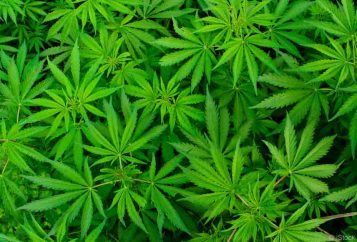
DMV’s 2011 DUI-MIS report (Oulad Daoud & Tashima, 2011) shows that among California alcohol-drug fatalities, 21.4% involved drugs only and an additional 23.0% involved both drugs and alcohol, for a total of 44.4% that were drug-involved. Over the last decade in California, drug-involved fatalities increased by 146%. At the national level, the 2007 U.S. national roadside survey of drivers sponsored by NHTSA (Lacey et al., 2009) found evidence of drug use among 11.0% of daytime drivers and 14.4% of nighttime drivers. Marijuana was the most frequent individual drug found, other than alcohol. Their drug prevalence estimates do not necessarily indicate impairment at the time of driving, merely that the drugs or metabolites were present in the saliva.

Per se laws for alcohol have been readily enforced because of the development of hand-held breathalyzer devices, but there are no such devices for detecting drugs. The greater complexity of the effects of drugs and difficulty in determining impairment levels because of wide variation of effects at different doses make per se laws for drugs more difficult to establish and enforce than those for alcohol. Also, the difficulty in prosecuting drivers for drugs and driving comes from the fact that there are no scientifically-based concentration levels for the various drugs that definitively indicate impairment (Compton et al., 2009; Transport Research Centre OECD/ITF, 2010).

(This recommendation fails to recognize that the Court reporting systems [Abstracts of Judgment] require that Courts report the BAC levels of convictions.)

5. Support legislation, such as that proposed by SHSP Challenge Area #1, to establish zero tolerance for any amount of drugs in the driver’s system (for drugs listed in H&S §11550). Currently 15 states in the U.S. have zero-tolerance per se laws for drugs, and two more states make it illegal for drivers under 21 years old to have any amount of specified drugs in their systems when driving. (This recommendation would allow for DUI convictions for persons who are not impaired by drugs and would likely criminalize driving with metabolites which do not impair driving)

6. Train more law enforcement officers in the Advanced Roadside Impaired Driving Enforcement (ARIDE) program offered by CHP (16 hours of training), and in the Advanced Drug Recognition Experts training program (108 hours + plus biannual recertification). This will require continued dedicated funding from the Office of Traffic safety or other sources. (This recommendation would promote voodoo science and perpetuate the law enforcement myth that these tests are somehow scientifically valid. See, State of Maryland v. Brightful (2012) which held that DRE Protocols are not generally accepted as valid and reliable in the relative scientific community which include pharmacologists, neurologists, opthamologists, toxicologists, behavioral research psychologists, forensic specialists and medical doctors.)

7. Encourage prosecuting attorneys and law enforcement to attend training programs provided by the Traffic Safety Resource Program; the TSRP has been awarded continuing grant funds from OTS to provide mentoring and specialized training to both prosecutors and law enforcement in prosecuting DUI, evaluating vehicular felony and misdemeanor cases, and collision reconstruction. Special focus should be given to provide this training to counties with lower than average DUI conviction rates. (This study does not include an evaluation of the impact of IID legislation on the reduction of recidivism and simply continues the old paradigm of throwing more money at law enforcement.)

8. Initiate new efforts and strengthen existing ones, to change the traffic safety culture in California, especially regarding the use of alcohol/drugs and driving. Changing the public’s attitudes, beliefs, and norms about impaired driving can increase general deterrence, help shift support for additional resources and training, and increase commitment to detecting, prosecuting, and sentencing impaired drivers. (More of the same – why not promote legislation supporting passive alcohol detection in new vehicles – the technology exists which alerts drivers to excessive alcohol levels or disables vehicle.)